Game Economy Design: Where Gold Comes From and Where It Goes
Faucets and sinks, inflation, EVE Online's economist, Diablo III's auction house, and dual currencies: game economy basics with real examples.
Defeat a monster and gold drops; take that gold to the shop and buy a potion. It's such a familiar scene that we pass it by without much thought, but a fairly sophisticated design is hidden behind it. If gold comes too easily, it quickly loses meaning; if it's too scarce, players can't buy anything and get frustrated. In online games played by many people together, the problem becomes far more complex.
In this post, we start from "faucets and sinks," the basic structure of a game economy, and look at why inflation happens, what problems player-to-player trading economies face, and what lessons games like EVE Online and Diablo III have left behind. Finally, we explain why economy design matters even in single-player games.
The Basics of a Game Economy: Faucets and Sinks
The most common metaphor for explaining a game economy is a bathtub.
- Faucet (source): Where currency is newly created. This includes monster kill rewards, quest rewards, daily login rewards, and resource gathering.
- Sink: Where currency disappears from the game. This includes buying consumables at shops, equipment repair costs, enhancement costs, trading fees, and travel fees.
- Water in the tub: The total amount of currency players currently hold.
If the faucet is bigger than the sink, the water overflows. In other words, currency keeps accumulating. Most games tend to have many ways to earn money but few ways to remove it. That's because letting players earn money happily is easy, but making them spend it requires a convincing reason.
Inflation: What Happens When Gold Overflows
When currency keeps piling up, the same thing happens as in real life: inflation, where the same amount of gold buys less. In games where players buy and sell from each other, market prices rise endlessly.
The damage inflation does to a game is bigger than you might think.
- New players are put at a disadvantage. Long-time players have gold to spare, but newcomers can't afford market prices.
- Rewards lose meaning. If a 100-gold quest reward is worth the price of one apple on the market, there's no reason to do that quest.
- Illicit trading increases. When saving money in the game becomes hard, demand arises to buy gold with real cash.
Add "gold farming" to this and the situation gets worse. When bots or professional operators mint gold in bulk, the faucet grows abnormally large, and when bugs are exploited to create money infinitely, hyperinflation can even occur.
A similar phenomenon is called "mudflation." This is when each new update brings better equipment, so older equipment keeps losing value. It's a problem that long-running online games can hardly avoid.
How to Design Sinks
A good sink makes players feel they "spent" rather than "were robbed." Commonly used sinks include the following.
| Sink | Examples | Advantages | Caveats |
|---|---|---|---|
| Consumables | Potions, ammo, food | Natural and steady | Frustrating if too expensive |
| Upkeep | Equipment repair, housing tax | The more you play, the more is drained | Can feel like a penalty |
| Trading fees | Auction house sales fees | More effective the more trading occurs | If too high, players move to direct trades |
| Chance-based enhancement | Gear enhancement, reforging | Absorbs large amounts of currency | Failure is very frustrating |
| Cosmetics | Outfits, furniture, mounts | Enjoyable, not forced, spending | Only those who want it spend |
| Destruction and loss | Gear lost in combat | Creates ongoing market demand | Genre must be one where loss is acceptable |
Diablo III's gold auction house took 15% of the final sale price as a fee. Since a fixed percentage of gold disappears with every trade, the more active trading is, the bigger the sink becomes.
A Player-Driven Economy: EVE Online
The representative example of putting the economy at the center of a game is EVE Online, the space MMO from CCP Games. Most of this game's economy is driven by players. Players mine raw materials themselves, use them to build almost all ships and equipment, and buy and sell them on the market. Since the amount of money and goods in the game isn't fixed, prices move with supply and demand, and large-scale market manipulation and scams also happen.
One of the key reasons EVE Online's economy works is "destruction." When a ship is shot down in battle, it's gone, and someone has to buy another. This creates steady demand for players who build ships. The "Battle of B-R5RB," in which thousands of players fought for 21 hours in a single star system, is counted among the largest and most expensive battles in gaming history.
In 2007, CCP hired economist Eyjólfur Guðmundsson to manage the in-game economy, the first case of a game developer hiring an economist. CCP also makes adjustments close to economic policy, such as automatically placing more resources in regions with few players so that people spread out evenly.
The relationship with real money was also carefully designed. Players can buy an item called PLEX with cash and sell it on the in-game market to convert it into in-game currency, but the reverse, selling in-game currency or items for cash, is prohibited. It's a structure where the one path for cash coming in is made official, and the path going out is blocked.
Lessons from a Real-Money Auction House: Diablo III
Conversely, a frequently cited example of economy design hurting the game experience is the auction house of Diablo III (2012). At launch, Diablo III had two kinds of auction houses: one for trading with in-game gold, and another for buying and selling items with real money. In Korea, it launched without the real-money auction house because of gambling-related laws.
The problem was that the auction house clashed with the game's core fun. The fun of the Diablo series lies in defeating monsters and "obtaining good items yourself," but if buying from the auction house is far more efficient, hunting loses meaning. Former game director Jay Wilson said in 2013 that the auction house "really hurt the game," and Blizzard closed both the gold and real-money auction houses on March 18, 2014.
The lesson of this case is clear. No matter how efficient an economic system is in itself, it must not replace the core experience the game is trying to deliver.
Dual Currencies and Single-Player Economies
Economy design matters even in games that aren't online. In single-player games, the economy determines the "pace of progression" and the "weight of choices."
Animal Crossing: New Horizons uses two currencies. Alongside "Bells," the series' traditional currency, it added "Nook Miles," which accumulate when you do simple activities, and let players buy rewards such as furniture, recipes, and clothes with them. Nook Miles also serve as a guide saying, "Try doing this activity too." Splitting currency into two lets you give each a different role: one for free economic activity, and one as a reward for encouraging specific behaviors.
Free-to-play games often split "currency earned in the game" and "currency bought with cash." The line developers must hold here is not letting the paid currency become a shortcut that skips the game's core fun. As with Diablo III, if buying is overwhelmingly more efficient than playing, the game turns into a shop.
How a Small Studio Handles Economy
Most games made by small teams like ours are single-player games or short competitive games, so we never have to deal with a massive economy like EVE Online's. Even so, a few principles apply just the same.
- Write faucets and sinks in a table. If you write down in numbers how much is earned and spent per session, you can immediately see after how many hours currency will overflow.
- Where to spend comes first. When giving out money, first decide what players will want to buy with it. Money with nowhere to spend is just a number.
- Don't let cash replace fun. Paying can be a choice that saves time, but it must not become a button that skips play itself.
- Lower the entry barrier. Players shouldn't be made to worry about money before they get used to the economy.
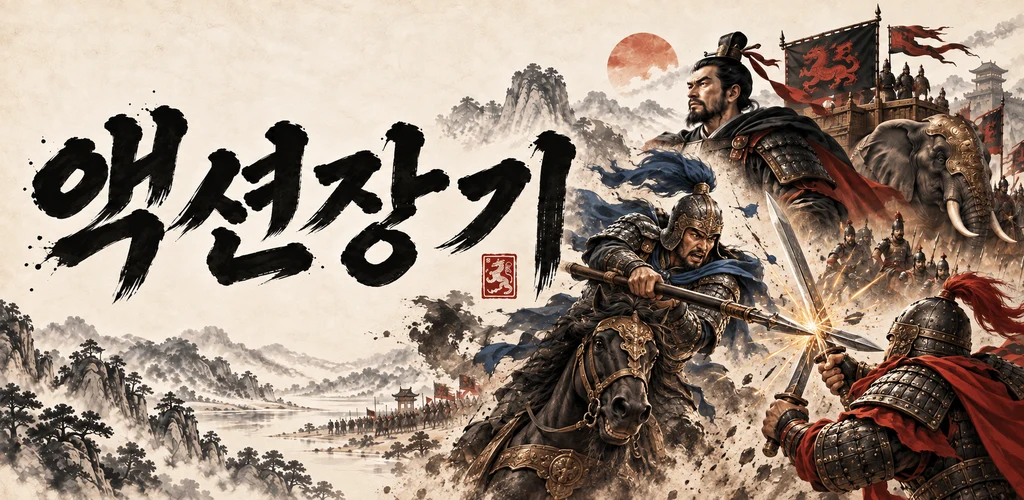
For example, Action Janggi lets players play the first 10 games for free, so they can fully check whether the game suits them before considering a purchase.
Closing Thoughts
A game economy looks like a numbers game, but ultimately it determines how rewarding players feel. Whether receiving 100 gold makes you happy or leaves you indifferent is decided by that game's faucets and sinks. In a well-designed economy, even small rewards have meaning, and big expenses have a reason.